How Hummingbirds Hover: Nature's Flying Marvel
Have you ever watched a hummingbird hover, as if suspended in mid-air, and wondered how it manages such a remarkable feat? The mechanics behind this bird’s unique ability are nothing short of awe-inspiring. Dive into the world where science meets wonder, exploring the intricacies of flight that allow these tiny creatures to defy gravity with unparalleled precision.
How Hummingbirds Achieve Mid-Air Hovering

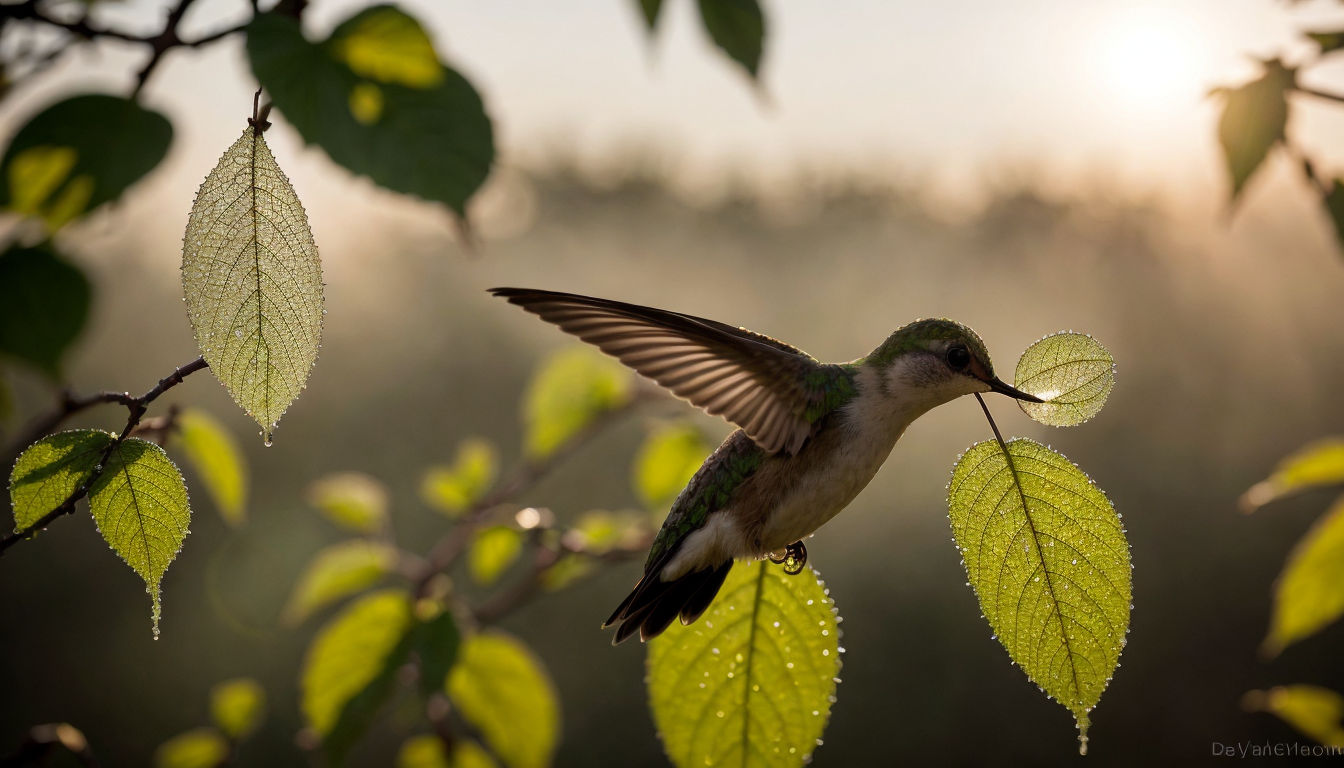
Hummingbirds are one of nature's most extraordinary feats, capable of hovering in mid-air for extended periods—a skill rarely seen among other birds. What sets them apart is their unique wing structure and flight patterns that enable these tiny birds to achieve this remarkable maneuver.
Mechanics of Hovering Flight in Hummingbirds
Hovering is an incredibly energy-intensive activity that requires precise control over lift and drag forces generated by the bird's wings. Hummingbirds accomplish this through a combination of specialized anatomy and sophisticated aerodynamics. Their wings are exceptionally broad and flat, compared to other birds', which allows them greater surface area for generating lift.
Hummingbird wings operate at high angular velocities; they can flap up to 80 times per second. What's more impressive is the full range of motion their wings achieve: they move in a figure-eight pattern, not only vertically but also horizontally, creating both forward and upward thrust with every downstroke and upstroke.
The Role of Wingbeat Patterns
During hovering flight, the hummingbird’s wingbeat pattern changes dramatically from its typical forward-flight mode. In forward flight, their wings sweep back during the upstroke to reduce drag while maximizing lift. However, when hovering, they employ a more circular motion: their wings rotate at the shoulder joint so that each stroke generates upward thrust. The angle of attack is also adjusted continuously to optimize air pressure dynamics.
This dynamic control over wing orientation allows hummingbirds to hover with remarkable efficiency and stability. Their ability to tilt their body slightly forward or backward further aids in controlling lift forces, providing subtle adjustments needed for stable hovering.
Reader Confessions
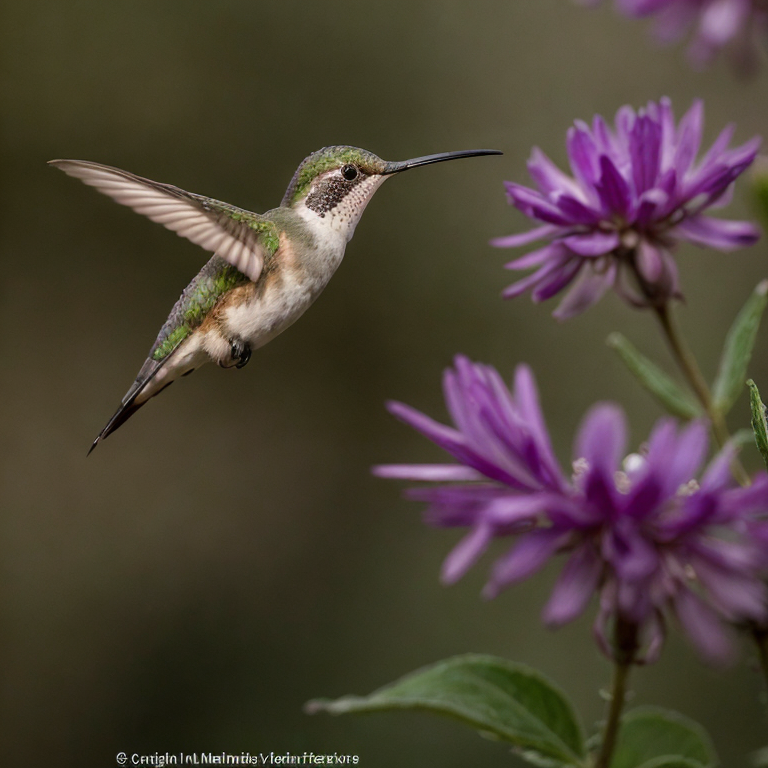
"I once witnessed a hummingbird hovers above my garden while I was watering the plants. It seemed like it was watching me carefully, almost as if it knew something about me that no one else could see."
Hovering vs. Other Birds
While many birds can hover briefly for short durations—like kestrels and quails—none match the sustained hovering performance of hummingbirds. Their unique wing structure and flight patterns give them unparalleled control over their aerial movements, enabling long-term mid-air suspension without significant energy loss.
Hummingbird wings are uniquely suited to generate lift at various angles of attack. During hovering, they can adjust this angle rapidly and precisely for optimal efficiency. The high frequency of their flapping allows them to generate sufficient thrust even in the face of wind resistance.
Aerodynamic Efficiency
Hovering requires a bird to continuously oppose gravity with upward forces generated by its wings. Hummingbirds have evolved to do so incredibly efficiently, thanks to the wing's ability to achieve maximum lift at low airspeeds—a capability that sets them apart from other birds. This is achieved through intricate control mechanisms and anatomical adaptations.
Their wings generate more vertical lift than horizontal thrust when hovering, ensuring steady suspension rather than forward movement. The rapid, continuous motion of their wings not only maintains balance but also allows for swift transitions into other flight modes.
A Whispering Forest Secret

"Every time I visit that old stand of trees in the forest, it feels like they're murmuring secrets among themselves. One day, a hummingbird hovered there longer than usual—it was almost as if it was watching something intangible."
The Role of Body Tilt and Wing Angle Adjustment
To maintain stability during hovering flight, hummingbirds rely on slight body tilts that allow them to angle their wings for maximum lift in all directions. This fine-tuned control ensures they can hover steadily despite environmental disturbances like gusts of wind.
The bird's rapid wing movements enable it to generate both upward and downward forces as needed. By adjusting the angle at which its wings meet the air, a hummingbird can finely balance against gravity while conserving energy for longer hovering periods.
The Science Behind Dreaming

Hovering Challenges in Different Environments
Hovering is significantly more challenging under varying conditions such as high altitudes or heavy winds. Hummingbirds adapt to these challenges through continuous adjustments in wing angle and body posture, leveraging their highly responsive flight control systems. These adaptations highlight the versatility of hummingbird hovering abilities across diverse environmental settings.
In higher elevations, where air density decreases, generating lift becomes more difficult due to reduced atmospheric pressure. However, through precise modulation of wing motion and aerodynamic efficiency, these birds can still maintain stability during hovering by employing a broader range of wing angles that maximize lift generation at lower speeds.
Hollow Pines
Hummingbird Agility in Flight Transitions
Hummingbirds display exceptional agility when transitioning from hovering to forward flight. By rapidly altering their wing movements and body posture, they can swiftly switch between these two modes without losing stability or momentum. This seamless transition underscores the complexity of their aerial maneuvering capabilities.
When a hummingbird shifts from hovering to forward flight, it utilizes its unique ability to tilt both body and wings simultaneously for optimal aerodynamics. The transition involves a rapid change in wingbeat pattern from circular motion to back-and-forth sweeping—a process that requires split-second adjustments and precise control over the angle of attack and wing orientation.
TL;DR
- Mechanics of Hovering Flight: Hummingbirds achieve mid-air suspension through specialized wing structures and figure-eight wingbeats.
- Wingbeat Patterns: Adjustments in wing motion allow for both horizontal and vertical thrust during hovering.
- Aerodynamic Efficiency: Rapid, precise control over lift generation ensures stable suspension despite environmental challenges.
- Agility in Flight Transitions: Seamless shifts from hovering to forward flight highlight the complexity of their aerial skills.
The Pale Veil
An Unexpected Encounter
One evening while observing a hummingbird’s hover above my garden, I noticed something peculiar. As dusk fell and shadows lengthened, the bird seemed to become mesmerized by an unseen presence within the garden—a faint hum emanated from nearby foliage. It was as if it had detected something we cannot perceive.
The hummingbird's sudden interest in an ethereal whispering left me questioning everything I thought I knew about these feathered wonders. As night closed in, it seemed to vanish into the twilight without a trace—leaving behind only the lingering hum and a chill that settled deep within my bones.
Conclusion
The science of how hummingbirds hover reveals intricate adaptations honed over millions of years. Their flight mechanics exemplify nature’s engineering prowess but also hint at mysteries beyond our understanding. In moments like witnessing their ethereal dance, one can’t help but wonder what secrets these tiny birds might hold—secrets perhaps as vast and profound as the whispering forest itself.
As you continue to marvel at the hovering feats of hummingbirds, remember that there may be more than meets the eye. They hover not just in air but possibly between realms, guarding secrets we’re only beginning to comprehend.