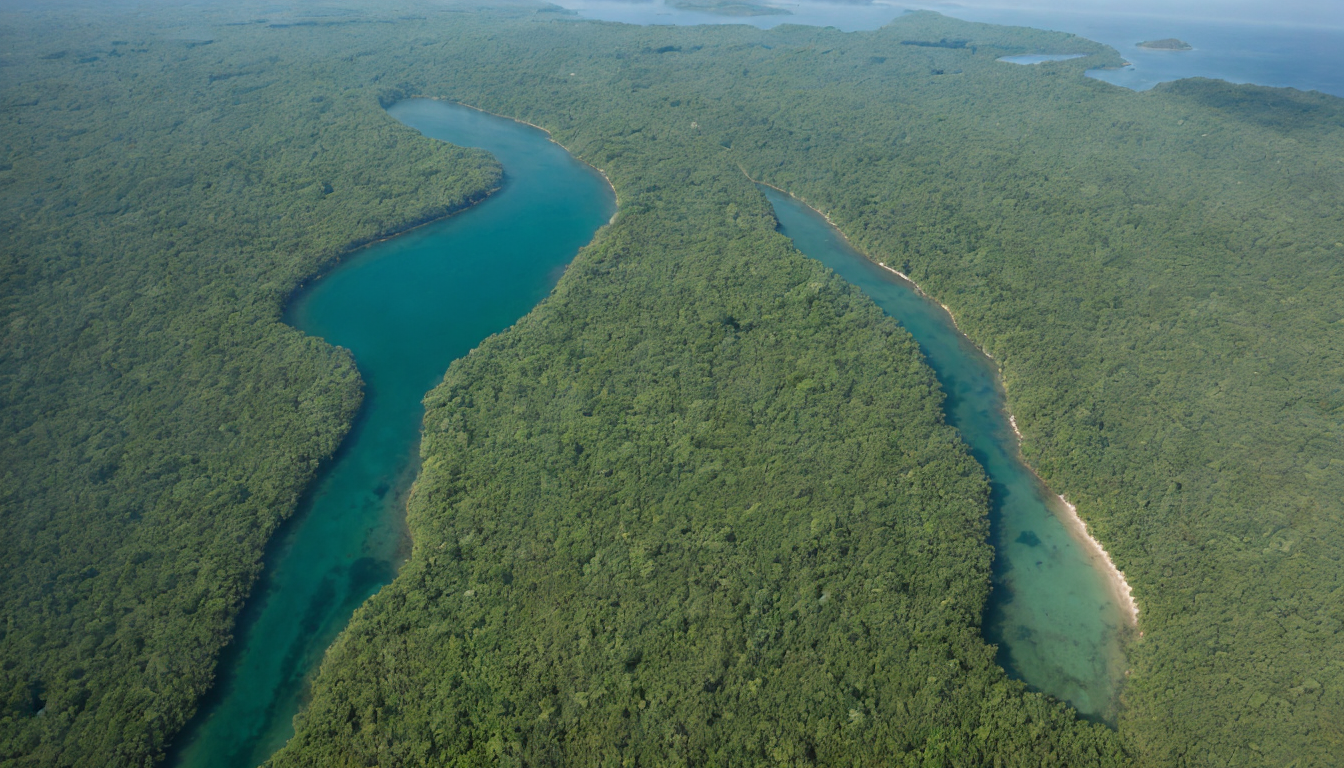
Atlantis: Fact or Fiction?
The lost continent of Atlantis has captivated the imagination of people for centuries. From Plato's dialogues to modern-day explorations, the search for evidence of this mythical land continues to intrigue historians and archaeologists alike. However, separating fact from fiction in the realm of ancient legends is a challenging task.
TL;DR
- No Physical Evidence: Despite extensive searches, no physical remains or artifacts have been found that definitively prove the existence of Atlantis.
- Historical Context: The concept of Atlantis originated with Plato's allegorical stories and has since become intertwined with various mythologies and pseudo-scientific theories.
- Modern Interpretations: Some researchers propose alternative locations for a "lost continent" based on geological evidence, but these remain speculative.
- Scientific Critique: Most scholars argue that the Atlantis story is more of an allegory than historical fact.
- Cultural Impact: The legend of Atlantis has inspired numerous works in literature, film, and popular culture.
Historical Context

The idea of a lost continent called Atlantis first appeared in Plato's dialogues "Timaeus" and "Critias," written around 360 BCE. In these texts, the philosopher presented Atlantis as an ancient civilization located beyond the Pillars of Hercules (the Strait of Gibraltar). According to Plato, this advanced society was destroyed by a cataclysmic event, leaving no trace behind.
Ancient Texts
Plato's description is the only known primary source for Atlantis. He wrote about it in two dialogues:
- Timaeus: This dialogue introduces the concept of Atlantis as an island located beyond the Pillars of Hercules.
- Critias: In this dialogue, Plato provides more details about the civilization and its destruction.
Historical Interpretations
While many have taken Plato's description at face value, others view it as a cautionary tale rather than historical fact. Scholars argue that Plato used Atlantis to illustrate philosophical points about ideal governance and human hubris. The story of Atlantis may also reflect contemporary fears about natural disasters and societal collapse.
Scientific Perspectives
Despite the allure of uncovering an ancient lost civilization, scientific evidence for the existence of Atlantis remains elusive. Modern geological studies provide a framework within which to evaluate claims about lost continents and underwater ruins.
Geological Evidence
The theory of plate tectonics helps explain how continental masses move over time. However, it does not support the idea of a massive landmass suddenly disappearing into the ocean as described in Plato's account. Instead, geological evidence points towards gradual changes in Earth's surface over millions of years.
Subduction Zones and Volcanic Activity
Some researchers propose that volcanic activity or subduction zones could have led to the sudden disappearance of an island or coastal region. For example, the catastrophic eruption of Thera (Santorini) around 1600 BCE has been suggested as a possible inspiration for Plato's story.
Underwater Archaeology
Advancements in underwater archaeology and sonar technology have enabled researchers to explore deeper waters than ever before. However, despite these technological advancements, no definitive evidence of Atlantis has emerged from the depths of the ocean.
Potential Sites
Several locations around the world are considered potential sites for a lost civilization similar to Atlantis:
- Bimini Road: A series of stones off the coast of Bimini in the Bahamas.
- Coral Castle: An ancient structure near Miami, Florida, believed by some to be connected to Atlantis.
- Yonaguni Monument: Underwater structures off the coast of Japan.
Cultural and Mythological Impact

The legend of Atlantis has permeated various aspects of culture and mythology. From literature to film, the idea of a lost civilization continues to fascinate people worldwide. However, it is crucial to distinguish between historical fact and cultural myth.
Literature and Film
Numerous books, novels, and films have been inspired by the concept of Atlantis:
- Jules Verne's "20,000 Leagues Under the Sea": Features a brief mention of Atlantis.
- Clive Cussler's "Atlantis Found:" A novel about an expedition to find the lost city.
- "The Lost City of Atlantis" (2014): An archaeological documentary series.
Modern Myths and Pseudoscience
Some contemporary theories propose that advanced technologies or extraterrestrial origins are behind the legend of Atlantis. These ideas, while intriguing, lack scientific support and often rely on subjective interpretations rather than empirical evidence.
Alternative Theories
- Bermuda Triangle: Some suggest a connection between the Bermuda Triangle's mysterious disappearances and an underwater city.
- Advanced Ancient Civilizations: Claims about ancient civilizations possessing advanced technology are popular but not supported by mainstream archaeology.
Misconceptions and Criticisms

The allure of Atlantis has led to many misconceptions and criticisms regarding its historical accuracy. It is essential to critically evaluate claims and theories surrounding this mythical land.
Skepticism in Academia
Most historians and archaeologists view the story of Atlantis as a literary device rather than a factual account. They argue that Plato's intention was to use the narrative for philosophical purposes, not to document real events.
Lack of Physical Evidence
The absence of physical evidence remains a significant barrier to accepting Atlantis as historical fact. No artifacts or ruins have been found that can be conclusively linked to the lost continent.
Cultural Relativism
Understanding ancient cultures and their myths requires cultural relativism—acknowledging that beliefs and stories are shaped by specific contexts. The story of Atlantis should be examined within the context of Greek philosophy rather than as a literal historical account.
Conclusion
The quest for evidence of Atlantis continues to captivate the imagination, yet scientific scrutiny reveals little support for its existence beyond Plato's allegorical narratives. While the legend of Atlantis remains an enduring part of human culture and mythology, it is important to distinguish between fact and fiction when evaluating historical claims. As research in archaeology and geology progresses, any discoveries related to lost civilizations will likely be grounded in empirical evidence rather than mythical tales.
In summary, while the allure of a sunken city continues to inspire creativity and curiosity, the current consensus among scholars suggests that Atlantis remains firmly within the realm of myth and philosophy.
As an Amazon Associate, The Weird Report earns from qualifying purchases. Product links above are suggestions related to this article; they don't affect what we write.