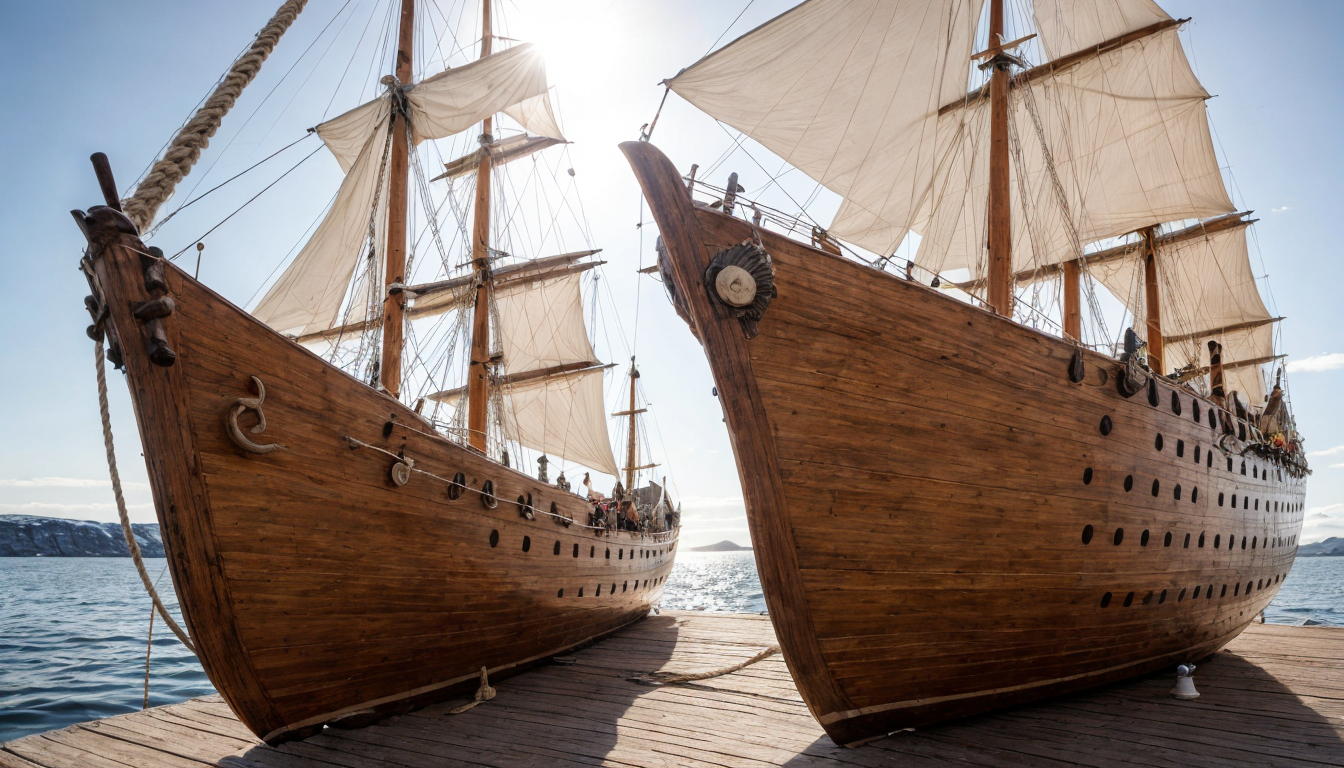
How Vikings Navigated Without Compasses: Natural Navigation Secrets
TL;DR
- Solar Angle: Vikings used the position of the sun to estimate direction and time during daytime voyages.
- Celestial Bodies: They employed stars, particularly Polaris (the North Star), for navigation at night.
- Natural Indicators: Sea birds, ocean currents, and wind patterns were crucial in determining their course.
- Sunstones: These crystal tools helped Vikings determine the sun’s position even on cloudy days.
- Landmarks and Maps: They relied on well-known landmarks and rudimentary maps to guide them across vast distances.
The Science Behind Viking Navigation

Viking sailors, renowned for their daring voyages across the North Atlantic, navigated using a combination of natural observations and tools. Their methods were sophisticated yet grounded in practical, everyday knowledge of the environment around them. This section explores the scientific principles that underpinned their navigation techniques.
Solar Angle Observation
The sun’s position in the sky provides crucial information about direction during daylight hours. Vikings used this principle extensively to orient themselves while sailing. By observing the angle at which the sun rose and set, they could determine east-west directions accurately. This method was particularly useful for maintaining a steady course over long distances.
Celestial Navigation
At night, the stars provided an invaluable navigational aid. One of the most important celestial bodies used by Vikings was Polaris (the North Star), which always points north. By measuring its angle above the horizon using simple instruments or even their hands, Viking sailors could determine latitude and maintain a northerly heading.
Sunstones: The Crystal Compass
Sunstones are believed to be crystal-based tools that Vikings used to navigate on overcast days when the sun was not visible. These crystals work by polarizing light, allowing the navigator to detect the direction of the hidden sun through its interaction with sunlight passing through the stone. Although no actual Viking-era sunstones have been definitively identified, historical texts and archaeological findings suggest their existence and use.
Historical Context and Techniques

The Vikings’ ability to navigate vast distances without modern technology stems from centuries of maritime tradition and accumulated knowledge passed down through generations. This section delves into specific historical practices that were integral to Viking navigation.
Use of Sea Birds as Guides
Vikings observed the behavior of sea birds closely, noting where they flew during different times of day or night. These birds often nested on islands far out at sea but would return daily from fishing grounds located in predictable directions relative to their home bases. By following flocks of seabirds back towards land, Vikings could pinpoint island locations and chart courses accordingly.
Ocean Currents and Wind Patterns
Understanding the prevailing currents and wind patterns was another critical aspect of Viking navigation. They knew that certain areas had consistent ocean flows and winds blowing in specific directions at different times of year. This knowledge allowed them to plan efficient routes and avoid dangerous sea conditions such as storms or whirlpools.
Landmarks and Maps
Despite not having detailed maps as we know today, Vikings relied heavily on visual landmarks along coastlines for navigation. They would memorize distinctive features like headlands, bays, and promontories that marked particular locations. These mental maps were crucial for guiding ships to safe harbors or avoiding treacherous waters.
Cultural Significance
The importance of successful navigation in Viking culture cannot be overstated. It was not just a practical skill but also one deeply embedded within their societal structure and mythology.
The Role of Skalds (Poets) and Runestones
Skaldic poetry often celebrated voyages and feats of navigational prowess, serving as both entertainment and historical record for the community. Meanwhile, runestones—inscribed stones commemorating important events or individuals—sometimes detailed specific journeys made by Vikings, highlighting the cultural value placed on successful navigation.
Mystical Interpretations
While Viking society was practical in its approach to sailing, there were also elements of mysticism associated with celestial bodies and natural phenomena. For instance, the Northern Lights (aurora borealis) might have been interpreted as divine signs or omens affecting maritime travel.
Misconceptions and Modern Insights

Over time, several misconceptions about Viking navigation techniques have arisen due to lack of historical evidence or romanticized portrayals in literature and media.
The Myth of the Magical Sunstone
While sunstones are a fascinating part of Norse lore and recent archaeological speculation, there is no definitive proof that Vikings actually used them. This has led to debates among scholars regarding their exact nature and effectiveness compared to other navigational aids like traditional compasses introduced later in history.
Overestimating Viking Navigational Skills
Some modern narratives tend to exaggerate the complexity or accuracy of Viking navigation methods, portraying them as almost superhuman feats of maritime ingenuity. However, while Vikings were indeed skilled sailors capable of crossing large expanses of open ocean, their techniques were firmly grounded in empirical observation rather than advanced scientific principles.
Conclusion: A Legacy of Practical Wisdom
In summary, the navigational prowess of Viking sailors was rooted in a blend of practical experience and keen natural observation. By understanding solar angles, celestial bodies, natural indicators like sea birds and currents, along with rudimentary map-making skills, Vikings were able to traverse vast distances with remarkable success. This legacy continues to inspire both scientific research into ancient navigation techniques and modern appreciation for the ingenuity of early mariners.
Through careful study of historical texts, archaeological findings, and ongoing experiments replicating Viking-era methods, we can continue to unravel the intricate details behind how these intrepid explorers navigated without the aid of compasses.