Bigfoot - also known as Sasquatch - is a creature that has haunted our forests, tickled our curiosity, and kept conspiracy theorists up at night for decades. But is there any truth to the tales of this towering, hirsute being? Today, we dive into the thickets of fact and fiction surrounding Bigfoot, exploring its deep roots in Indigenous lore and its subsequent rise as a cultural phenomenon thanks to J. W. Burns's coverage in Canadian publications during the 1920s. We'll sift through the evidence from Washington, Oregon, and northern California to give you the real story behind this elusive legend. So grab your hiking boots and join us on a quest for the truth!
TL;DR
- The legend of Bigfoot has roots in Indigenous lore dating back centuries.
- J. W. Burns popularized the term 'Sasquatch' through articles in Canadian publications during the 1920s.
- In 2014, Bryan Sykes found that hair samples thought to belong to Bigfoot were actually from common animals like bears and wolves.
- Despite numerous sightings and media events, no definitive proof of Bigfoot's existence has been uncovered.
Bigfoot or Bogeyman?
The legend of Bigfoot has roots far older and deeper than its flashy name would suggest. In what is now British Columbia, tales of forest-dwelling giants have circulated for centuries among the Salish peoples, long before Europeans set foot on these shores. The term 'Sasquatch' itself comes from the Halkomelem language of those early storytellers - a linguistic echo of ancient fears and curiosities.
But it was J. W. Burns, a journalist and teacher with an eye for headlines, who brought 'Sasquatch' into the mainstream in the 1920s. His articles in Canadian publications sparked widespread interest and gave the creature its first taste of fame. Decades later, in 1958, Bigfoot burst onto the scene - literally - in Humboldt County, California. Bulldozer operator Jerry Crew found massive footprints around a logging road construction site at Bluff Creek, which the local paper dubbed 'Bigfoot.'
It's tempting to think that every mystery needs an exposé. In 2002, after logging contractor Ray Wallace died, his family revealed he had been behind the 1958 Bigfoot tracks using carved wooden feet. But while this revelation shook some believers, it didn't quite put the myth to bed. After all, who wouldn't want a bit of fun in the forest?
Bigfoot’s Top Hits
You think Bigfoot just wanders around, leaving prints and howling in the woods? Think again. This guy has a hit parade of sightings that would make any pop star jealous.
In 1924, miners near Mount St. Helens were pelted with rocks by hairy creatures who refused to be intimidated. The Ape Canyon incident wasn’t just rock solid; it was also the first big splash in Bigfoot’s growing legend.
Decades later, the Patterson-Gimlin film hit Bluff Creek in 1967 like a meteor. This shaky footage is still the crown jewel of alleged Sasquatch evidence today. It shows what looks like a massive, hairy humanoid striding away through the trees - a scene that could have come straight out of a B-movie.
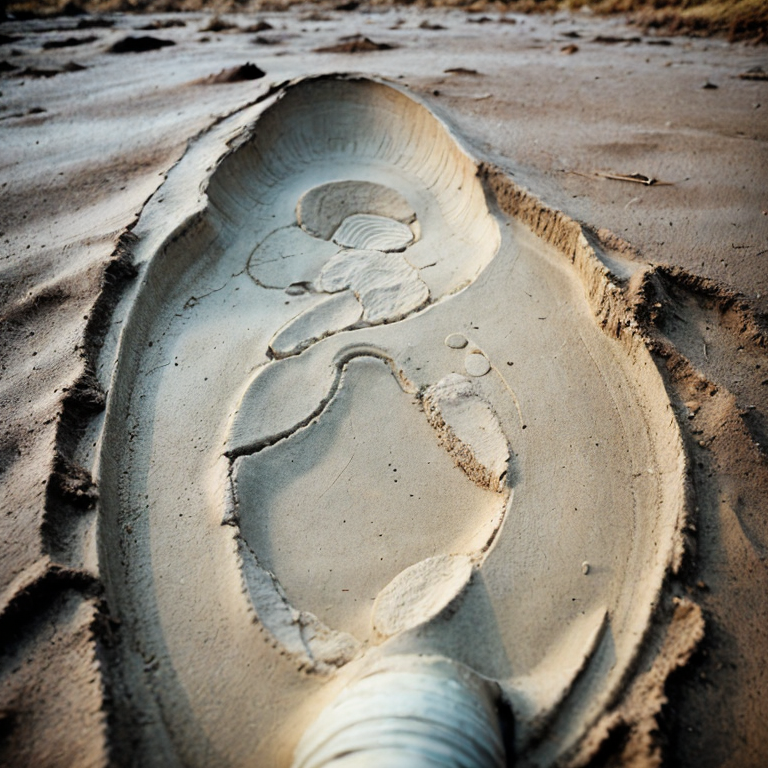
Then there are those plaster casts. Since 1958, folks have been making moulds of giant footprints and claiming them as proof of Bigfoot’s existence. Some say they show skin ridges; others sniff at carved feet as the culprit. Either way, it’s one step closer to a mystery that refuses to be solved.
And let’s not forget the blurry photos, hair samples, and audio recordings - each adding another chapter to this long-running soap opera of the supernatural. Every new piece of evidence keeps Bigfoot in the spotlight, whether or not you believe he’s real.
DNA or Denial?
When it comes to Bigfoot's biggest hits, some of them are in the lab rather than the woods. In 2014, Bryan Sykes, a geneticist from Oxford, decided to get his hands dirty - or more accurately, to test hair samples that people claimed belonged to Bigfoot and Yeti. The results? Not exactly what monster enthusiasts were hoping for.
Sykes and his team analyzed 30 hairs, but almost every one of them matched animals we already know about - bears, wolves, horses, cows, and even humans. Even the two mysterious Himalayan samples that initially looked like an ancient polar bear turned out to be just ordinary bears after a second look. So much for groundbreaking evidence.
The fact is, there's not a single bone, body, or clear DNA strand from an unknown ape species that has ever been found. Despite decades of sightings and reports across vast swaths of the North American wilderness, the only physical proof investigators have turned up are the occasional black bear tracks - bears can stand on their hind legs and leave some pretty convincing prints. Plus, a few folks have admitted to faking footprints over the years.
It’s worth noting that sightings often spike after major media events like the 1958 newspaper story or the infamous Patterson-Gimlin film in 1967. This pattern suggests that Bigfoot may be as much of a cultural phenomenon as it is a creature of the forest. So, while believers hold tight to their hopes, the science and evidence just aren’t there yet.
Bigfoot’s Living Relatives?

Bigfoot has outlived its fair share of skeptics, but what if it does have some distant relatives? The truth is, even today, scientists are still discovering big, hairy animals no one knew existed just a century ago. Take the mountain gorilla: it wasn’t recognized by science until 1902 - hardly last week in evolutionary terms. And let’s not forget the giant squid: filmed alive in its deep-sea lair only as recently as 2012.
So, could Bigfoot be a throwback to an ancient lineage? One possibility is Gigantopithecus, a real-life giant ape that once roamed Asia. Standing at about 3 metres (10 feet) tall, it’s often proposed as the ancestor of modern-day Sasquatch. But there’s a catch - no fossils of this big guy have ever been found in North America.
For Bigfoot to be real, we’d need more than just an ancient cousin; we’d need evidence that such creatures survived and thrived across continents. And let’s face it: the odds are long, but not impossible. So, while Gigantopithecus may have died out eons ago in Asia, its idea lives on - along with the hope that a big, hairy beast might still be hiding in our own backyards.
Bigfoot’s Backyard
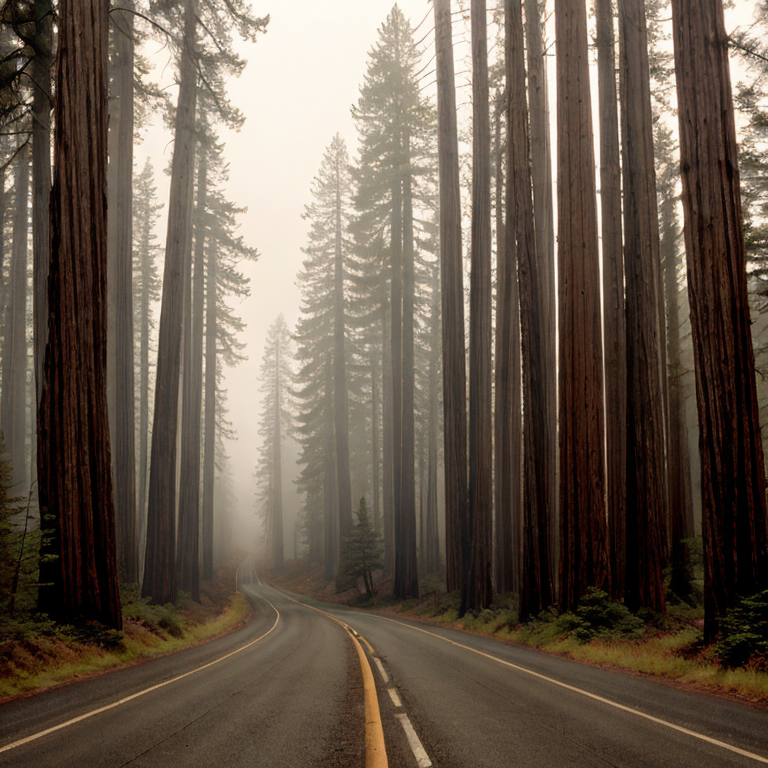
You might think that Bigfoot sightings are just a product of the imagination, but there's plenty to see and do if you want to go looking for the beast yourself. Start your hunt in Willow Creek, California, where locals claim this town is the epicenter of Bigfoot activity. The area boasts a museum chock-full of plaster casts and other Bigfoot paraphernalia. It’s also conveniently located along Highway 96, which doubles as the official Bigfoot Scenic Byway - perfect for road-tripping enthusiasts eager to spot something out of the ordinary.
For those who prefer an even more legal approach to Bigfoot hunting, head over to Skamania County in Washington State. On April 1, 1969, a local ordinance was passed declaring it illegal to kill a Sasquatch, making such an act a felony. While this law has since been amended and is now classified as a gross misdemeanor, the original legislation remains on the books - a humorous reminder that Bigfoot sightings are taken seriously in some quarters.
If you're heading north to British Columbia, don’t miss Sasquatch Provincial Park. This park not only offers stunning views but also pays homage to its namesake creature. Visitors can explore the trails and forests with the hope of catching a glimpse of what local lore claims is lurking there. Just remember to respect private property and keep an eye out for real wildlife while you're at it.
So, whether you’re driving through Willow Creek or wandering the trails in Skamania County and British Columbia, there’s plenty to do - and maybe even a chance to spot Bigfoot for yourself! But be sure to check local opening times and regulations before setting off on your adventure.
The Verdict: Tall tale territory (2/10)
Despite decades of expeditions, blurry photos, and alleged eyewitness accounts, no definitive proof of Bigfoot has ever emerged. The 2014 genetic study by Bryan Sykes found that hair samples thought to belong to Bigfoot or Yeti were actually from known animals like bears and wolves. No bones, bodies, or DNA have surfaced to support the existence of a giant, unknown primate in North America. While it’s tempting to dream about ancient giants roaming the woods, the evidence is overwhelmingly mundane.
So, when you’re out for a hike and think you spot something moving in the trees, remember: Bigfoot remains firmly in tall tale territory at 2/10 plausibility. It's okay - there are still plenty of mysteries left to solve!
The Weird Report Cryptid Desk treats legends as legends: the history above is documented, the verdict is our own opinion, and no creature here has been confirmed by science.
As an Amazon Associate, The Weird Report earns from qualifying purchases. Product links above are suggestions related to this article; they don't affect what we write.