The Hollow Earth theory is one of those ideas that sounds like it belongs in a B-movie, but it began with a serious scientific attempt to explain something odd about the compass. Dive in with us as we trace how astronomer Edmond Halley’s idea evolved from scientific speculation to full-blown legend, look at the evidence, and give you our honest take on whether there’s any truth to these subterranean speculations.
TL;DR
- In 1692, Edmond Halley suggested that the Earth was hollow, with concentric inner shells, to explain odd changes in the compass.
- In 1818, US Army officer John Cleves Symmes Jr. announced openings at the poles and asked Congress to fund an expedition to find the entrance.
- Seismology, satellites and gravity measurements show that the Earth is solid rock and metal, with no polar holes.
- We rate the Hollow Earth theory 1/10: pure folklore.
Who Started This Hollow Earth Craze?
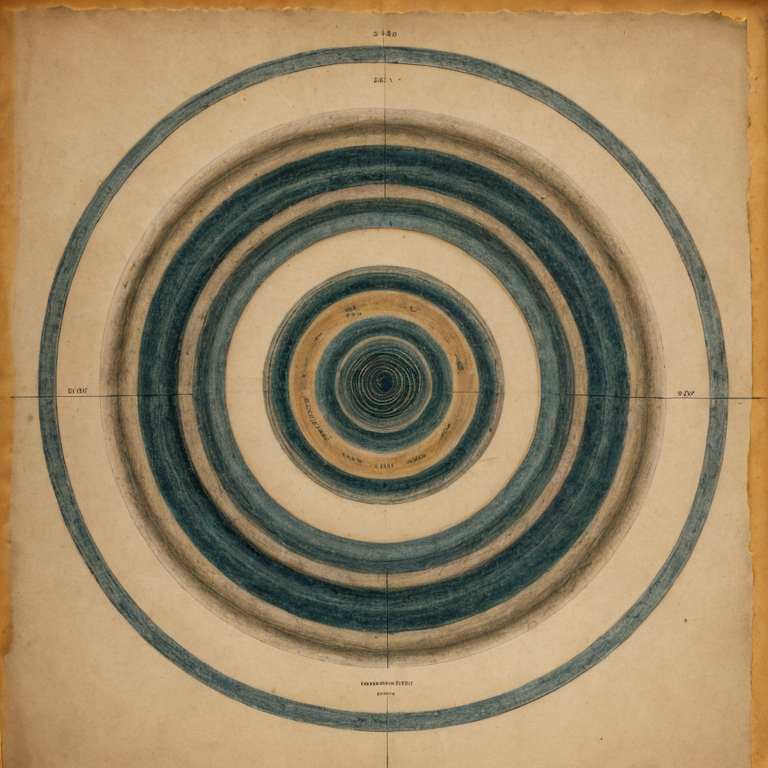
The idea that our planet is hollow didn't start with a wild-eyed conspiracy theorist. In 1692, astronomer Edmond Halley, of Halley's Comet fame, suggested to the Royal Society that the Earth was hollow, with concentric inner shells, to explain odd changes in the compass. He even speculated that the shells might be inhabited and lit by glowing gas. Halley's idea was a serious scientific attempt to explain compass behaviour at the time, not a joke.
In 1818, US Army officer John Cleves Symmes Jr. announced that the Earth was hollow with openings at the poles and asked Congress to fund an expedition to find the entrance. The 'Symmes Holes' became famous. Jules Verne's 1864 novel Journey to the Center of the Earth, and Edgar Rice Burroughs's Pellucidar stories in the 1910s, popularised the idea in fiction.
So next time you see a tabloid claiming the Earth is a shell-world, remember: this wild idea has its roots in some pretty respectable scientific circles.
Is There Proof of a Hidden Inner World?
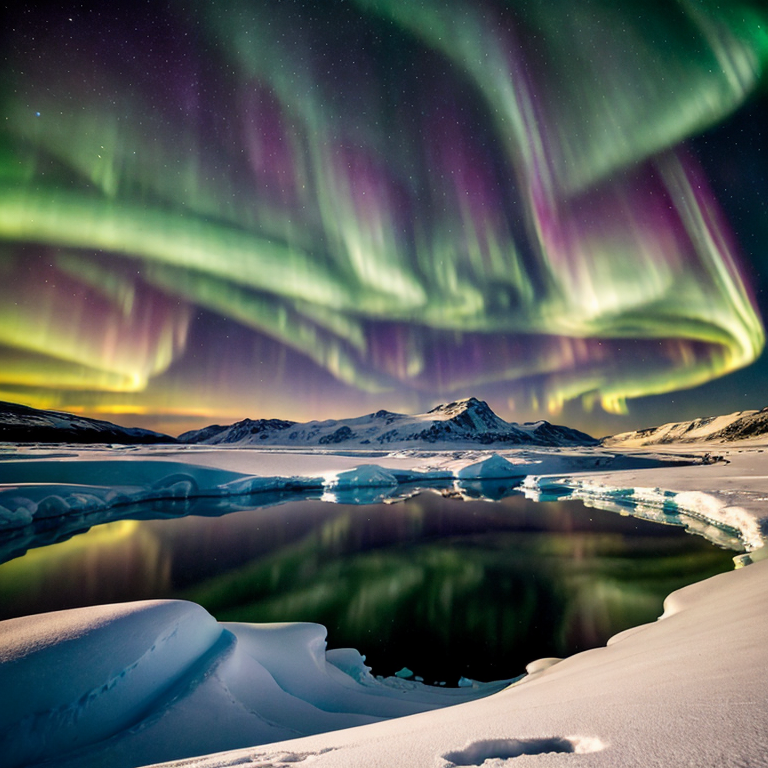
Believers often cite polar auroras as light from an inner world, and the migration of birds toward the poles as proof of a warm interior. Claims that Admiral Richard Byrd flew into a hollow Earth at the poles come from a supposed diary that has no verified origin.
So, while the theory sounds fantastical, there’s no solid proof backing up its claims.
Is There Any Room for Doubt?

So what really explains it? Well, let's start with the basics: our planet isn't as hollow as a chocolate éclair. The average density of the Earth is about 5.5 times that of water, measured by Henry Cavendish in 1798, and a hollow planet would be far lighter. Satellites and gravity measurements show that the Earth is solid rock and metal with no polar holes, and satellite images show the poles clearly.
Earthquake waves also behave exactly as expected in a layered, solid Earth, and in 1936 Danish seismologist Inge Lehmann used them to discover the solid inner core. So, while the hollow Earth theory might sound intriguing, the evidence is firmly against it.
How Deep Have We Actually Dug?
When it comes to digging deep into our planet’s secrets, humanity has barely scratched the surface. The deepest hole humans have drilled, the Kola Superdeep Borehole in Russia, reached about 12,262 metres (7.6 miles), less than 0.2 percent of the way to the Earth's centre. So what lies beneath? The Earth's layers are the crust, the mantle, a liquid outer core and a solid inner core of iron and nickel that is about as hot as the surface of the Sun.
In short, while the idea of a hidden inner world sounds thrilling, our current understanding of geology leaves no room for a hollow shell.
The Verdict: Pure folklore (1/10)
The Hollow Earth theory began as serious science but has long since fizzled out. Satellite data, gravity measurements and seismic waves all show a layered planet of rock and metal. There’s no room for a hollow shell or polar entrances in that picture.
So, the verdict: 1/10 Pure folklore. Next time you hear about hollow Earth, just enjoy it as an imaginative trip rather than hard science. And if you do want to go underground, the Kola Superdeep Borehole is a better bet than a polar hole.
The Cryptid Desk files these stories with a wink. The documented history is real, the rating is a judgement call, and nothing here counts as proof of anything.
As an Amazon Associate, The Weird Report earns from qualifying purchases. Product links above are suggestions related to this article; they don't affect what we write.