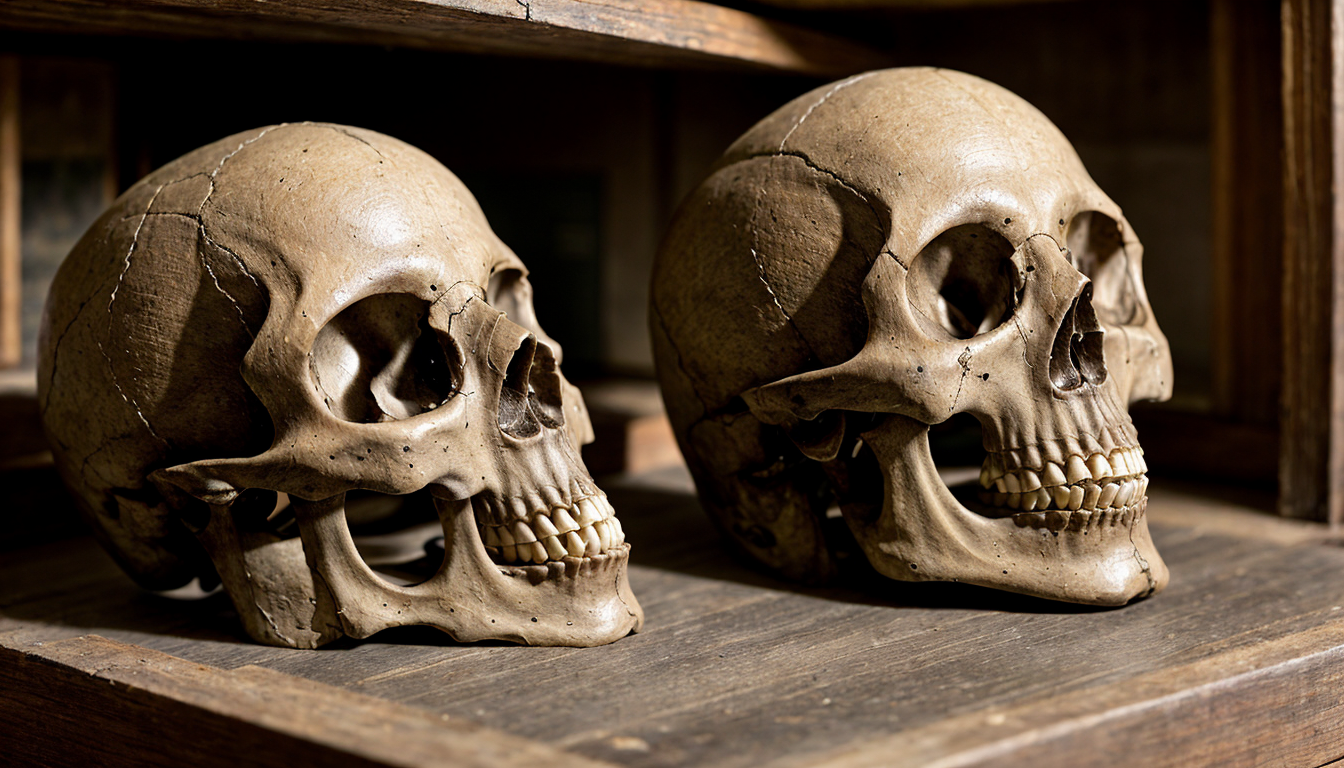
Piltdown Man, once hailed as Britain’s very own missing link, turned out to be one of the greatest hoaxes in scientific history. On 18 December 1912, amateur archaeologist Charles Dawson and Arthur Smith Woodward of the British Museum announced this supposed breakthrough from a gravel pit in Sussex, England, and it was celebrated as proof that Britain was the birthplace of humanity. Join us as we dive into the real story behind Piltdown Man, uncovering the evidence and delivering an honest verdict on what really went down in that gravel pit.
TL;DR
- Piltdown Man was announced on 18 December 1912 by Charles Dawson and Arthur Smith Woodward.
- The hoax involved a medieval human skull paired with an orangutan jaw, stained to appear ancient.
- Kenneth Oakley, Joseph Weiner, and Wilfrid Le Gros Clark exposed the fraud in 1953 using fluorine dating.
- For forty years Piltdown Man sat in textbooks, and the forger was never confirmed.
Skull Shenanigans Unearthed
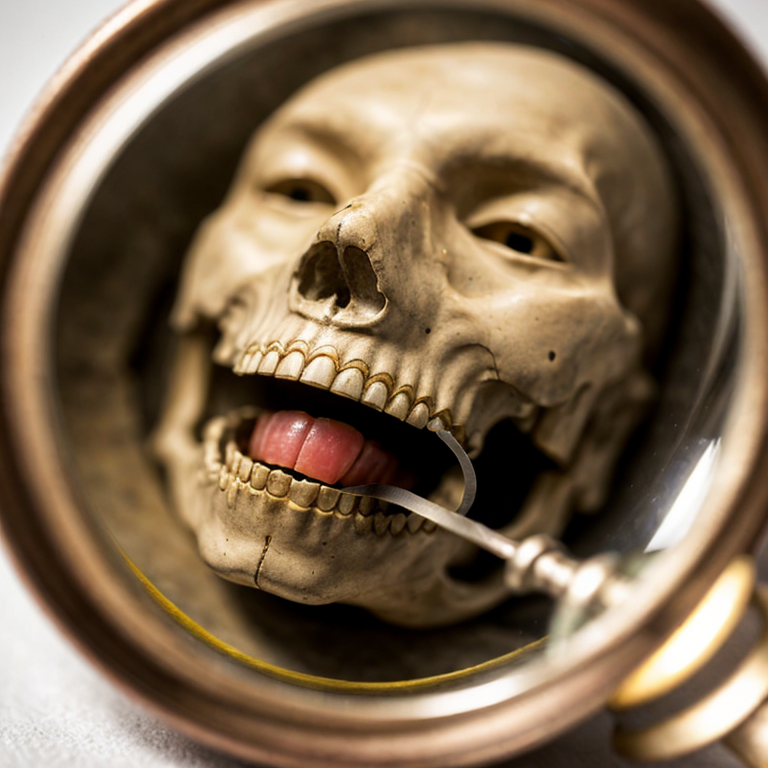
On 18 December 1912, amateur archaeologist Charles Dawson and Arthur Smith Woodward of the British Museum announced "Piltdown Man", a skull and jaw from a gravel pit in Sussex, England, said to be the missing link between apes and humans. The creature was named Eoanthropus dawsoni, "Dawson's dawn man", and celebrated as proof that Britain was the birthplace of humanity.
The Fake Fossil That Fooled Boffins
The skull looked human and the jaw looked ape-like, which fit what scientists in 1912 expected a missing link to look like. The teeth even showed human-like wear, which made the find seem convincing.
For forty years Piltdown Man sat in textbooks. It made scientists doubt later, genuine finds such as the Taung Child, discovered in South Africa in 1924. It took until 1953 for experts to expose Piltdown Man as an elaborate hoax.
Bones of Contention Exposed

In 1953, scientists Kenneth Oakley, Joseph Weiner and Wilfrid Le Gros Clark used new tests, including fluorine dating, and showed that the skull was from a medieval human, the jaw was from an orangutan, and the teeth had been filed down and everything stained to look ancient. This meticulous analysis revealed the shocking truth: Piltdown Man was nothing more than a cleverly crafted forgery.
Beyond the Fake Fossil

When it comes to Piltdown Man, the real story isn’t just about a hoax - it’s about the resilience and self-correction of scientific inquiry. After all, real human-evolution finds, such as Lucy, the 3.2-million-year-old Australopithecus skeleton found in Ethiopia in 1974, show that the "missing link" picture is too simple: evolution is a bush, not a ladder.
So could Piltdown Man have been real? The evidence points firmly to no. The Piltdown fraud was uncovered by scientists using better tests, which is how science is supposed to work: it can be fooled, but it can also correct itself.
The Verdict: Hoax, exposed (1/10)
In 1953, scientists Kenneth Oakley, Joseph Weiner, and Wilfrid Le Gros Clark exposed Piltdown Man as a hoax using fluorine dating and other tests. They found the skull was medieval human and the jaw belonged to an orangutan, with teeth filed down and everything stained to look ancient. The forger was never confirmed. Dawson, who died in 1916, is the most common suspect.
So, when it comes to the Piltdown Man, we can give it a solid 1/10 for plausibility - Hoax, exposed. And that’s not just bad news for those who wanted a missing link; it’s proof that science can self-correct with better methods and tests. So here's to hoping our next great discovery isn’t another stained orangutan jaw!
Filed by the Cryptid Desk. The jokes are ours, the history is on the record, and the monster, as always, remains unconfirmed.
As an Amazon Associate, The Weird Report earns from qualifying purchases. Product links above are suggestions related to this article; they don't affect what we write.